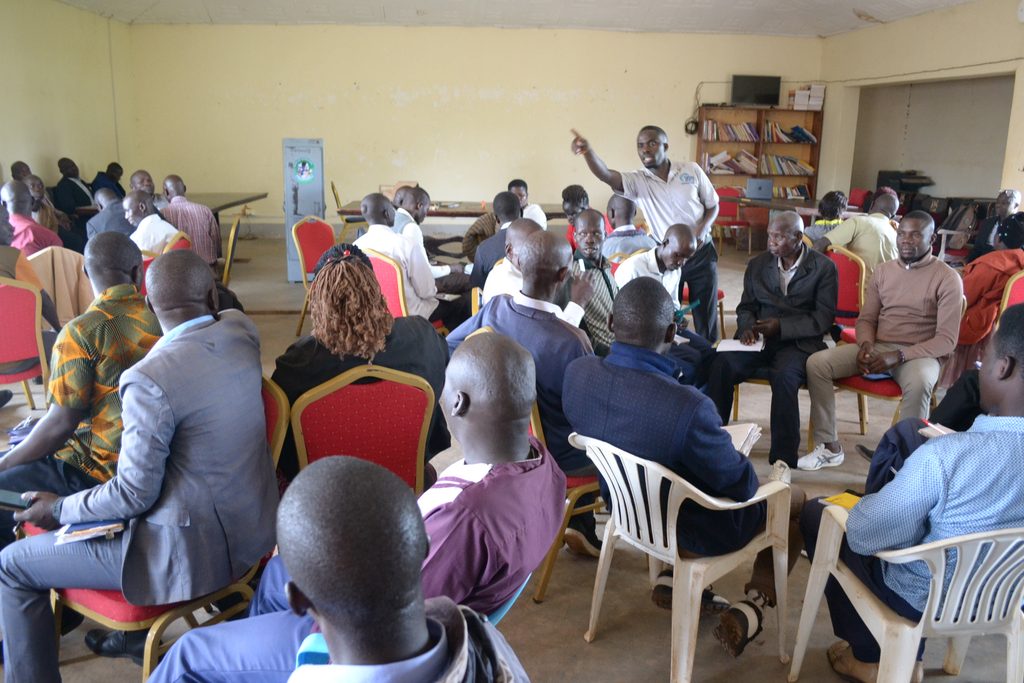
Teachers in Zombo district have been urged to move beyond traditional classroom demonstrations and give learners greater opportunities to handle, assemble and experiment with science equipment as a way of improving their understanding of science concepts.
The call comes amid growing emphasis on practical approaches to science education, with educators arguing that learners understand concepts better when they are actively involved in the learning process.
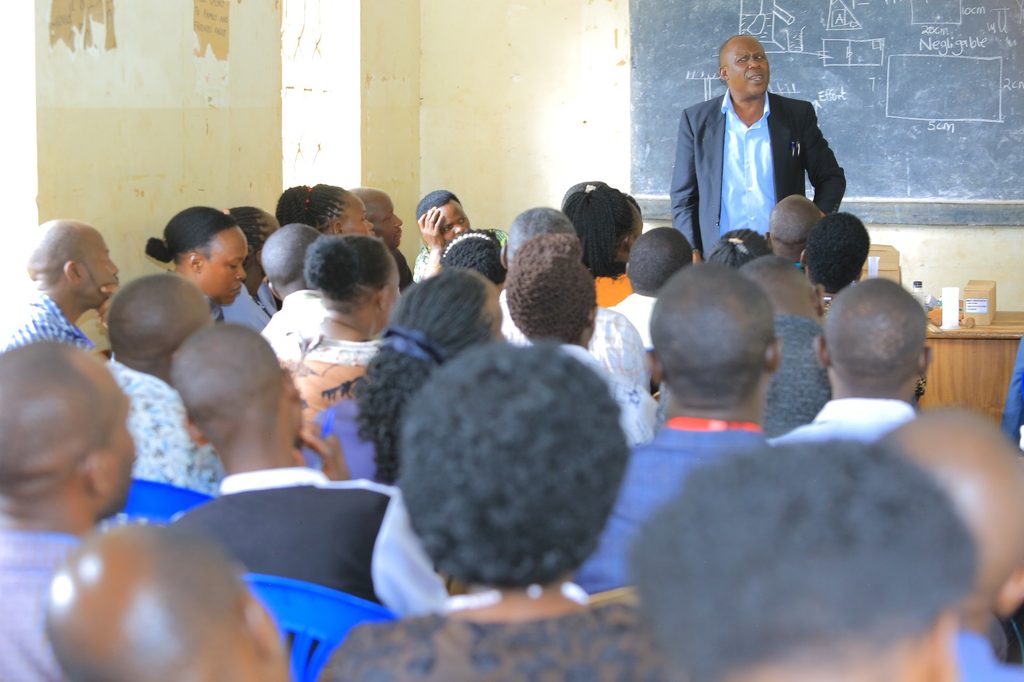
Speaking during a discussion on the use of science kits in schools, Mr. Nebert Nagaba, the Science Outreach Officer at River Flow International, said the primary focus should not only be on completing the science syllabus but on ensuring that learners understand the concepts being taught.
“Our interest is in the learners’ understanding,” Mr. Nebert said, stressing the importance of allowing learners to interact directly with science materials.
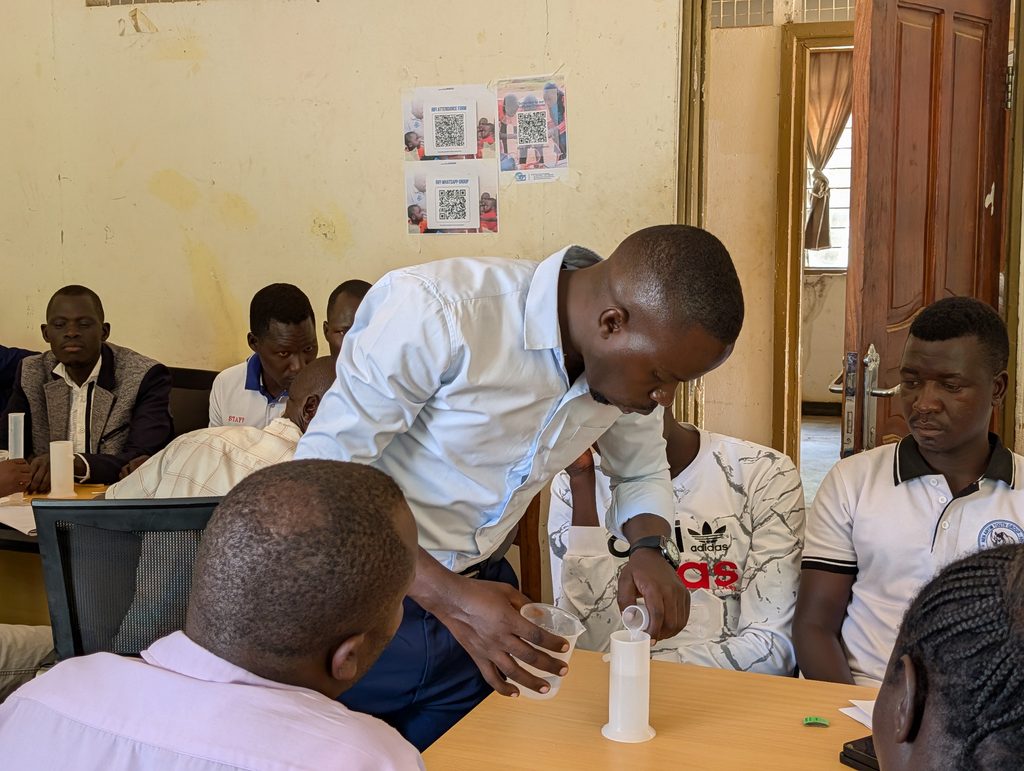
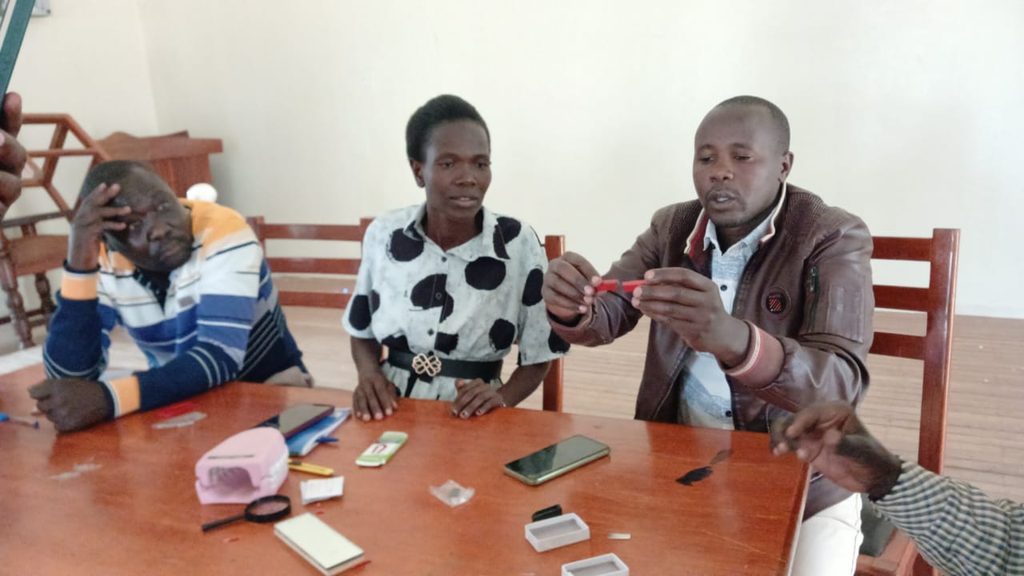
Mr. Nagaba encouraged teachers to involve learners in different stages of practical lessons, including assembling, using and packing away science equipment.
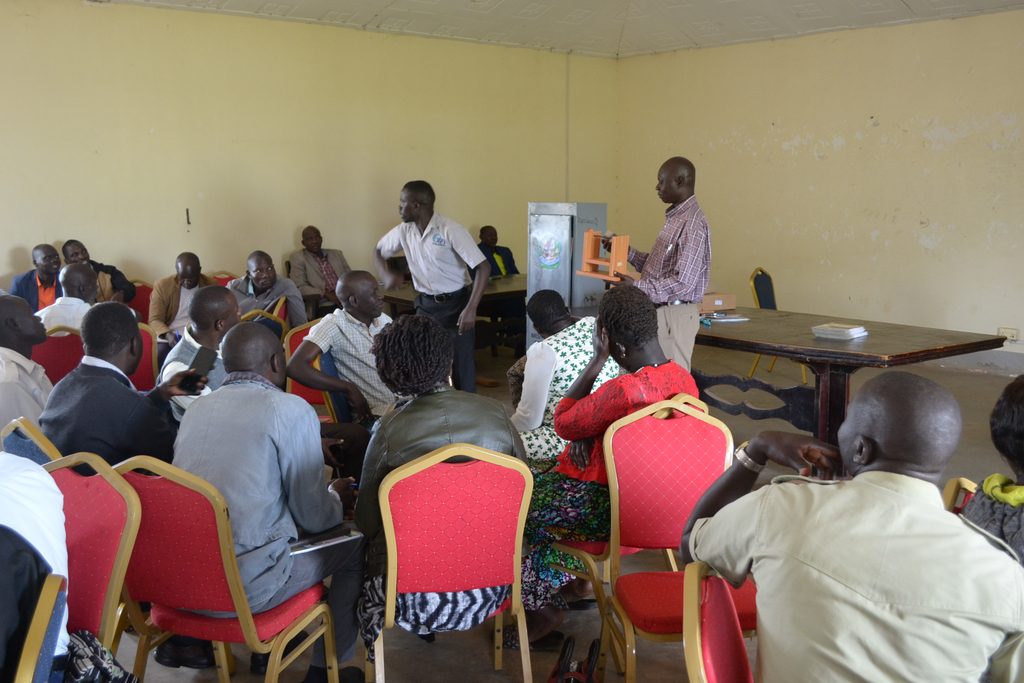
Instead of always demonstrating experiments themselves, teachers were encouraged to identify different learners to participate in the process, including those who may normally appear less interested or less engaged during science lessons.
According to Mr. Nagaba, such involvement can help learners develop confidence and a sense of ownership of the learning process.
“When you allow a learner to assemble and manipulate the materials, they begin to feel that they are part of the science lesson,” he explained.
The approach is also intended to support learners who struggle to understand abstract scientific concepts when they are taught only through explanations, diagrams or formulas.
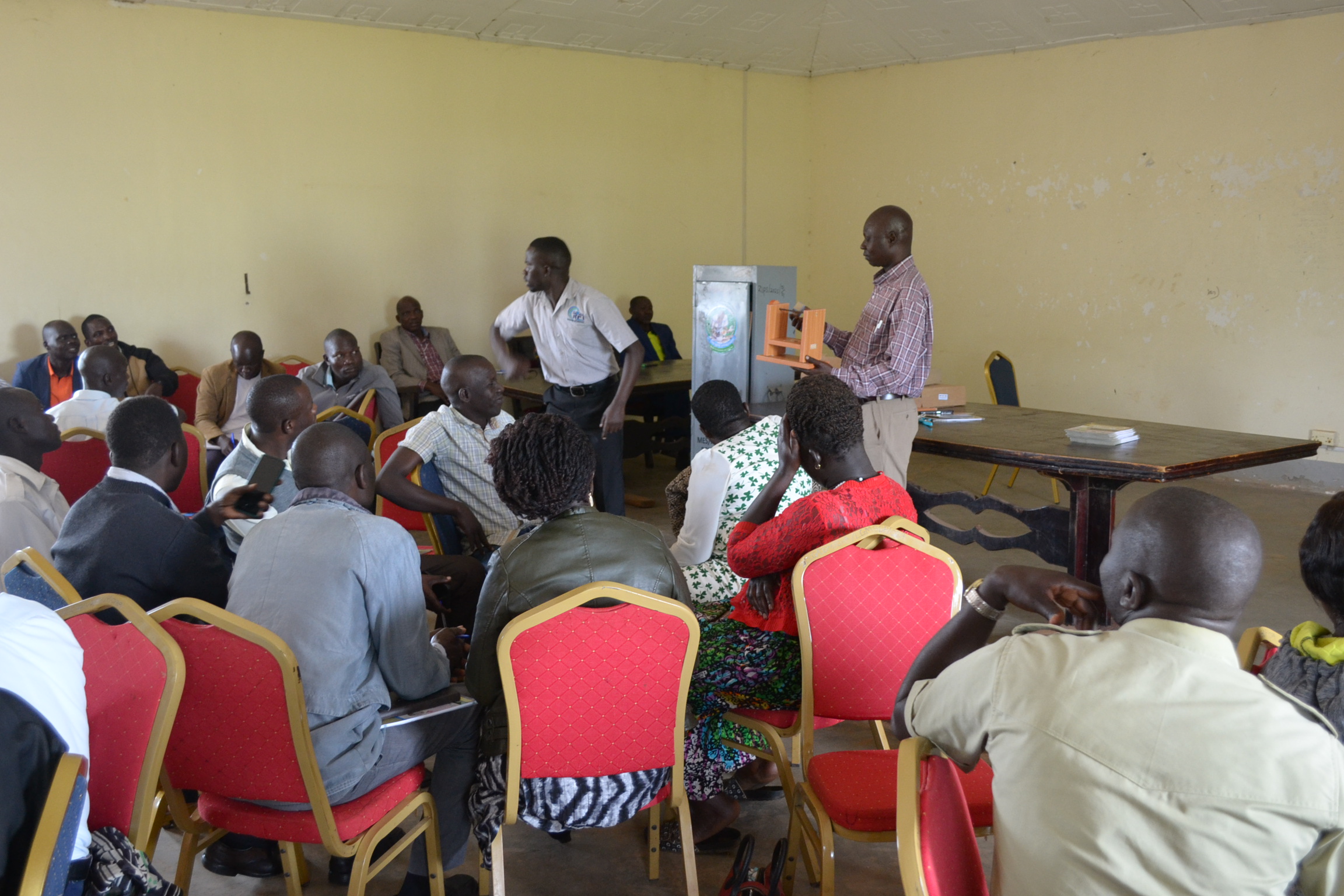
Mr. Nagaba cited the concept of moments in physics as an example. While learners may struggle when a teacher simply explains the relationship between mass, a beam and movement on the blackboard, handling the equipment can make the concept easier to understand.
“When you give me the opportunity to handle the materials, hang the masses, manipulate the beam and observe what happens, the concept becomes real,” He said.
The argument is that practical learning enables learners to see the relationship between scientific theories and what happens in the real world.
Mr. Nagaba further noted that some learners who appear uninterested in science may simply require a different approach to learning.
“There are learners in our classrooms who are exactly like me. They may struggle when science is taught only through words, diagrams and formulas, but when they are given an opportunity to see, touch, manipulate and experiment, they begin to understand,” He said.
The remarks highlight the potential role of science kits in supporting learner-centred teaching, particularly by providing teachers with materials that can be used to demonstrate scientific concepts while allowing learners to participate directly.
Rather than keeping science equipment exclusively in the hands of teachers, learners can be assigned responsibilities such as assembling models, conducting demonstrations, taking measurements and safely packing equipment after lessons.
Mr. Nagaba further challenged teachers to rethink the way practical science is taught.
“Dear colleagues, moments are simple, but learners are failing them,” the educator said, arguing that the challenge may not always be the complexity of the subject but the way learners encounter it.
The message comes at a time when education stakeholders are increasingly advocating for practical, learner-centered approaches that enable learners to develop scientific knowledge alongside problem-solving and critical-thinking skills.
For many learners, therefore, the science laboratory, or even a classroom equipped with appropriate science materials, can become more than a place where teachers demonstrate experiments. It can become a space where learners actively discover, test and understand scientific ideas.
This approach places the learner at the center of science education and reinforces the idea that making science practical can make science understandable.