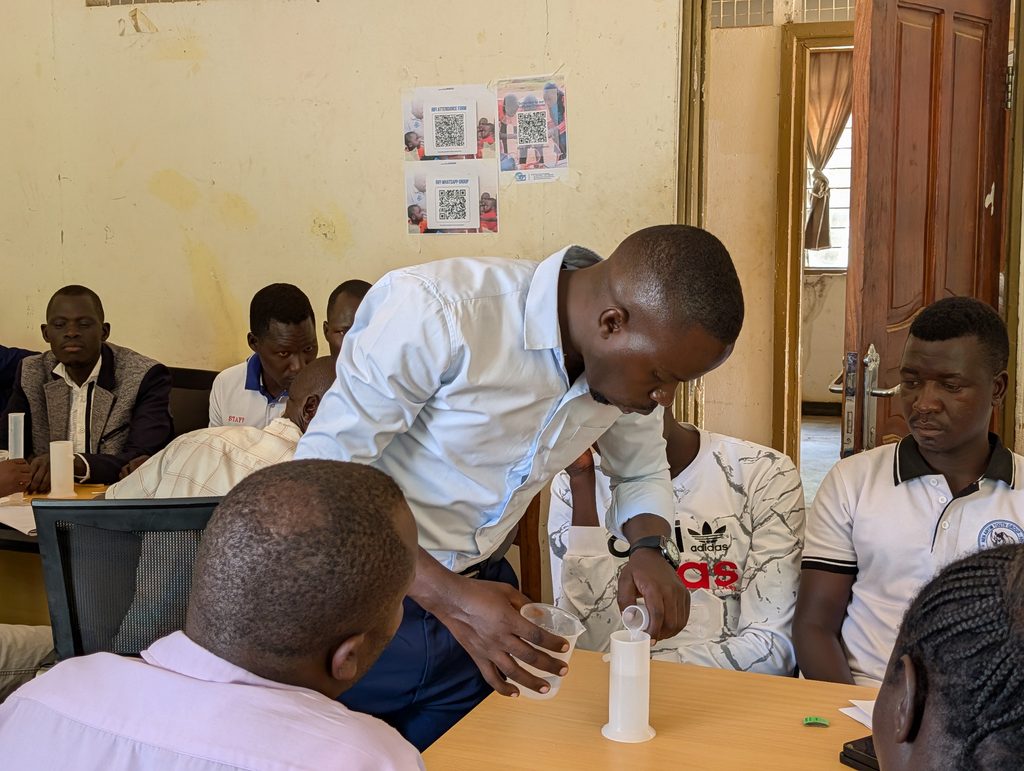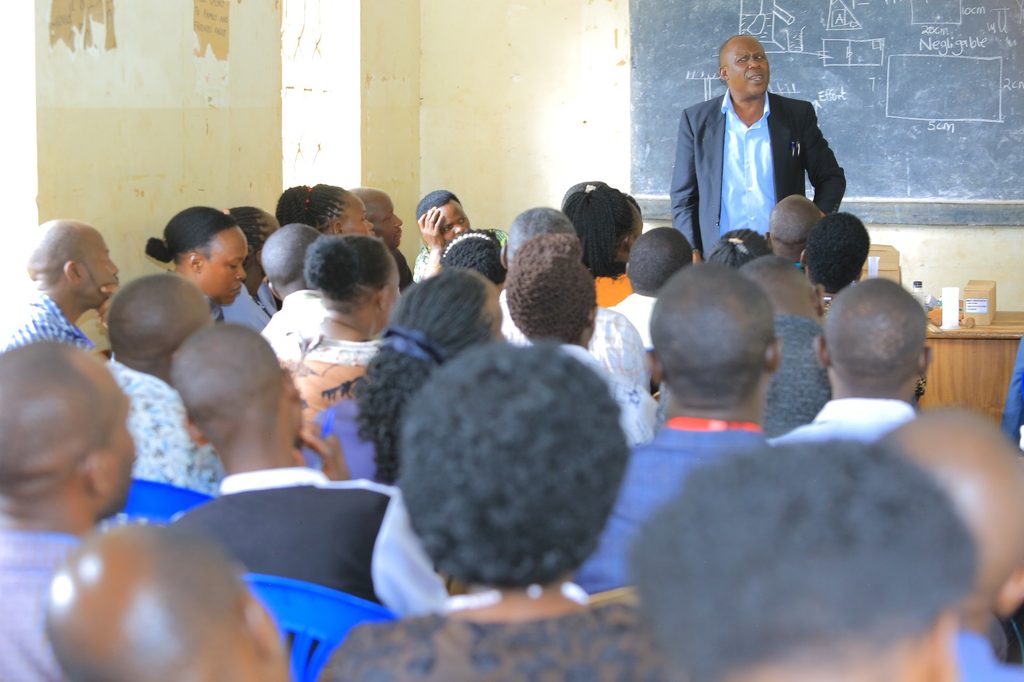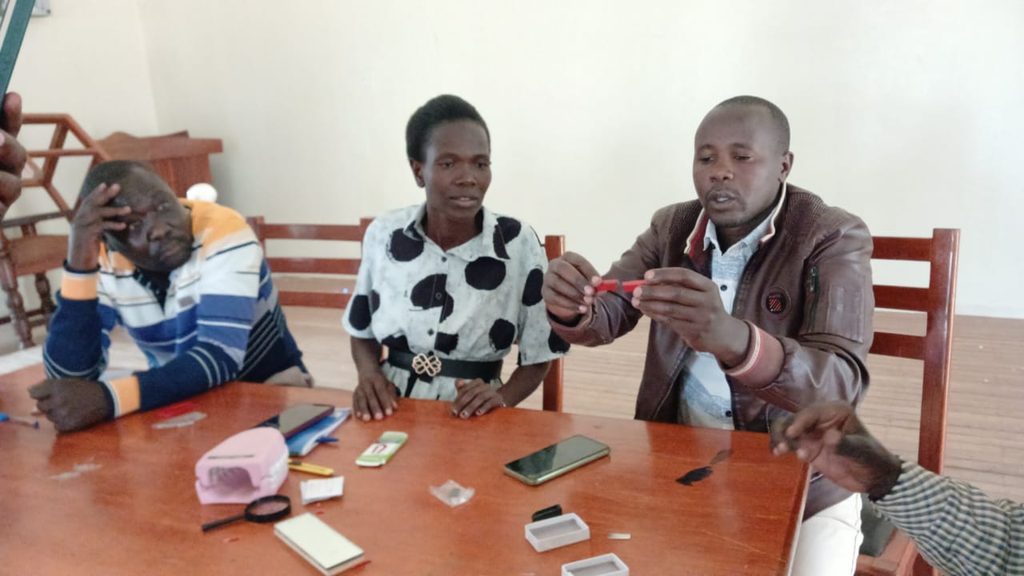
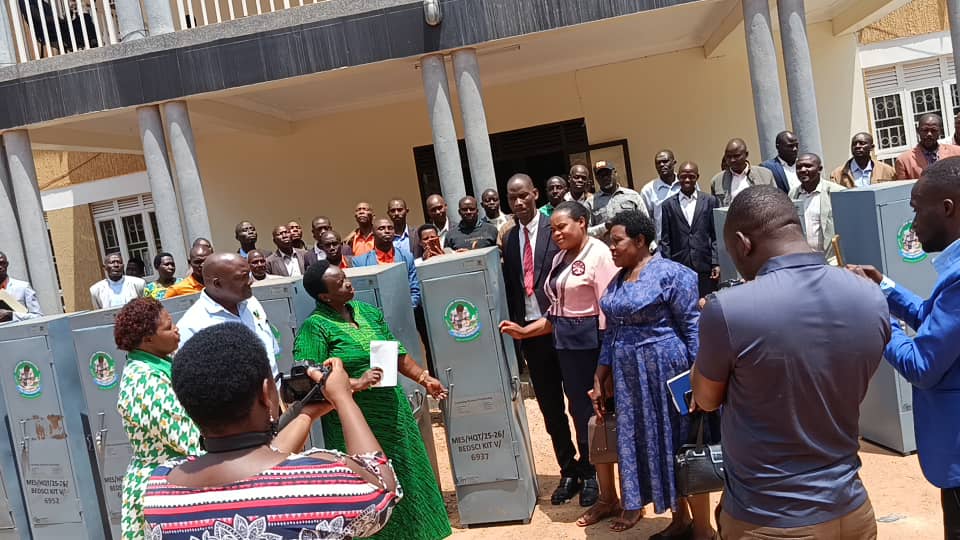
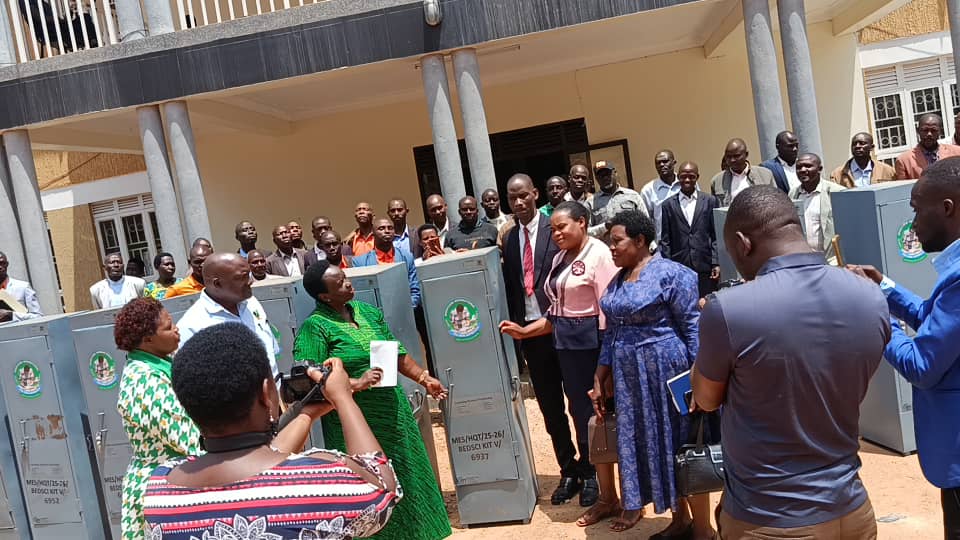
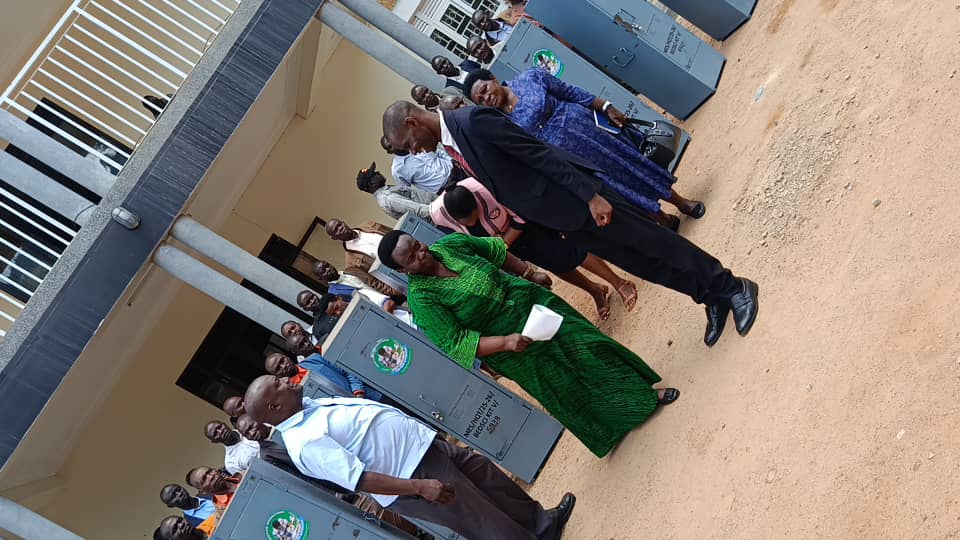
Buhweju District officials led by RDC Muhindo Pulkeria Mwine hand over Primary Practical Science Mini-Laboratory Kits to school head teachers during a ceremony held at the District Council Hall on Wednesday, August 12, 2026.
For years, science lessons in many schools have largely depended on textbooks, teacher explanations and drawings on chalkboards, leaving learners with limited opportunities to interact with the materials and concepts they are expected to understand.
This is now set to change in Buhweju District following the handover of science kits to 20 beneficiary schools, an initiative aimed at strengthening practical science teaching and improving learners’ understanding of scientific concepts.
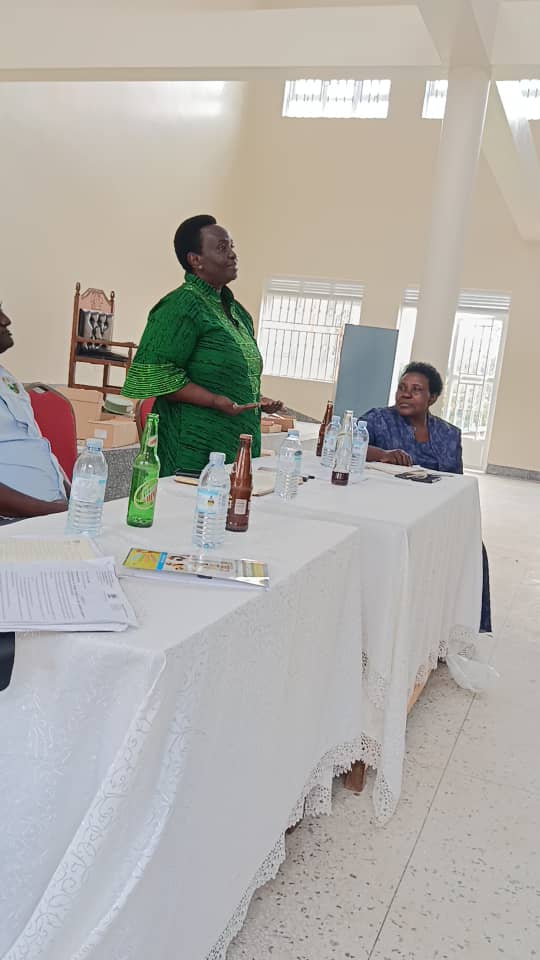
The handover ceremony brought together district leaders, education officials, school administrators, parents’ representatives and the media, marking an important step in efforts to make science learning more practical, engaging and learner centred.
The function was attended by the Chief Administrative Officer (CAO), Mr. Kalyesubula Fred; Resident District Commissioner (RDC), Madam Muhindo Pulkeria; LCV Chairman, Mr. Deo Atuhaire; Vice Chairperson, Ms. Francise Atwongyerwe; Secretary for Social Services, Ms. Florence Kasande; District Education Officer, Mr. Fred James Gabaami; the Education Officer for Special Needs; and other education staff.
Headteachers from all 20 beneficiary schools also attended the handover together with representatives from their respective School Management Committees (SMCs) and Parent-Teacher Associations (PTAs).
Moving science beyond the chalkboard
Science is a subject that requires learners to observe, experiment, investigate and draw conclusions from what they see. However, where schools lack adequate teaching and learning materials, teachers may be forced to rely heavily on theoretical explanations.
The provision of the science kits is therefore expected to give teachers an opportunity to demonstrate scientific concepts using appropriate materials while allowing learners to participate more actively in lessons.
Instead of simply hearing about scientific concepts, learners can interact with materials, observe demonstrations and participate in practical activities that connect classroom theory to real-life experiences.
For teachers, the kits provide an opportunity to make lessons more interactive and easier for learners to understand.
This approach is particularly important at the primary school level, where practical experiences can help stimulate curiosity and encourage children to ask questions, explore and develop an interest in science.
District leaders welcome the intervention
The presence of district leaders and education stakeholders at the handover demonstrates the importance attached to improving the quality of science education in Buhweju.
The participation of the CAO, RDC, political leadership, education officials, headteachers, SMC and PTA representatives also provide an opportunity for stakeholders to take collective responsibility for ensuring that the science kits are properly utilised and maintained.
For schools, receiving the kits is only the beginning. Their impact will ultimately depend on how effectively teachers integrate them into everyday classroom instruction.
School leadership, teachers, parents and education authorities therefore have a shared responsibility to ensure that the equipment is available for learners and used regularly to support practical learning.

A boost to teachers and learners
The science kits are expected to benefit both teachers and learners.
Teachers will have access to materials that can support demonstrations and practical activities, reducing dependence on improvised teaching methods. Learners, on the other hand, will have more opportunities to engage directly with scientific concepts.
Practical learning can also make lessons more memorable because learners are able to connect what they are taught in class with what they observe and experience.
For a learner who has previously only encountered a scientific concept through a textbook or drawing on a chalkboard, seeing and interacting with relevant materials can provide a completely different learning experience.
It can also help teachers identify areas where learners may have difficulties and provide opportunities for learners to work together, observe carefully, ask questions and develop problem-solving skills.
The role of communities
The involvement of SMC and PTA representatives in the handover is significant because the success of school-based interventions does not depend on teachers and government alone.
Parents and community representatives can play an important role in supporting schools to safeguard the equipment and encouraging learners to take their education seriously.
The participation of these stakeholders also creates greater ownership of the intervention at the community level.
When schools, parents, local leaders and education officials work together, the chances of ensuring that learning materials are properly managed and consistently used become stronger.
Government support for practical science
The handover also highlights the Government of Uganda’s continued efforts, through the Ministry of Education and Sports, to strengthen teaching and learning in schools by providing resources that support practical education.
Access to science learning materials is an important part of creating an environment where learners can develop not only academic knowledge but also practical skills.
The support provided to the 20 schools in Buhweju is therefore more than the delivery of equipment. It represents an investment in teachers, learners and the future of science education in the district.
As the schools begin using the kits, education stakeholders will be looking to see how the materials translate into more practical lessons, increased learner participation and improved understanding of science.
Looking ahead
The handover of the science kits presents Buhweju District with an opportunity to strengthen a culture of practical learning in its schools.
The challenge now is to ensure that the kits do not remain stored away or underutilised, but instead become part of regular classroom teaching.
Teachers need to use the materials consistently, school leaders need to support their effective use, and education officials need to continue providing guidance and monitoring their utilisation.
If effectively used, the science kits can help transform science lessons from largely theoretical sessions into more engaging experiences where learners are able to see, touch, observe, experiment and learn by doing.
For the 20 beneficiary schools, the handover is therefore not simply about receiving new equipment. It is a step towards creating classrooms where science becomes more practical, exciting and accessible to every learner.
The Buhweju community remains grateful to the Government of Uganda, through the Ministry of Education and Sports, for the support and commitment towards strengthening practical science education.