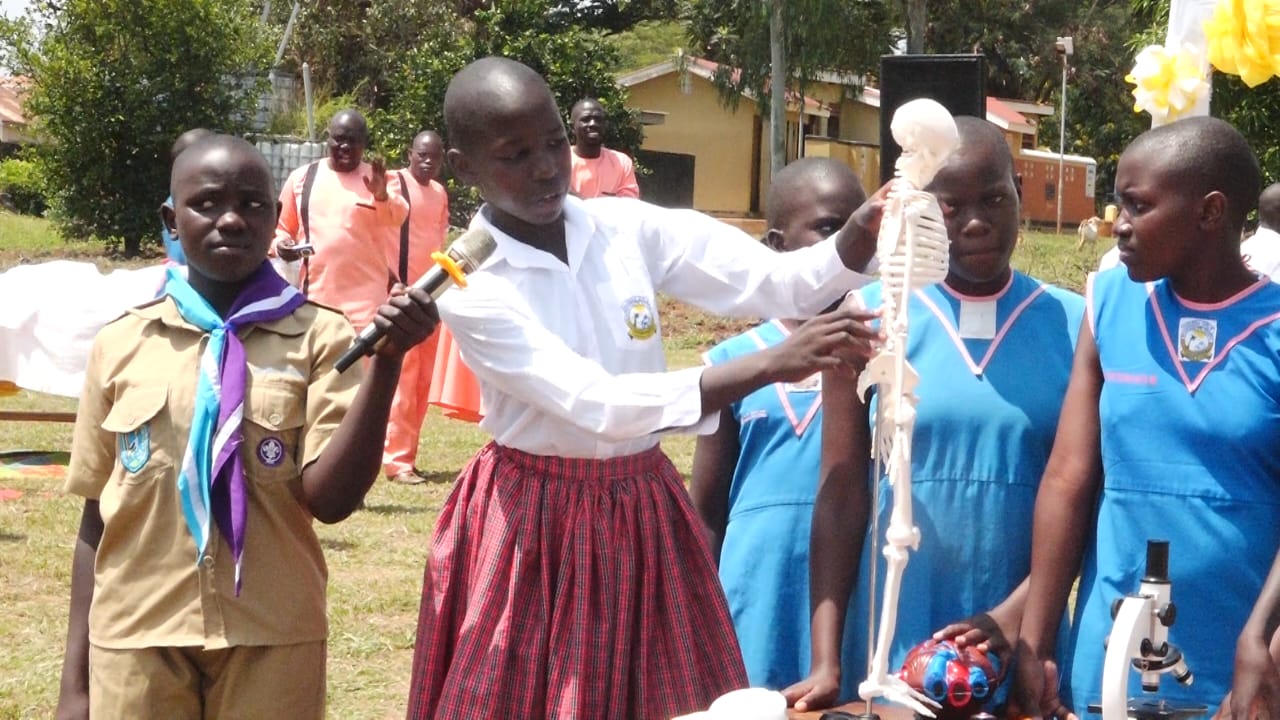
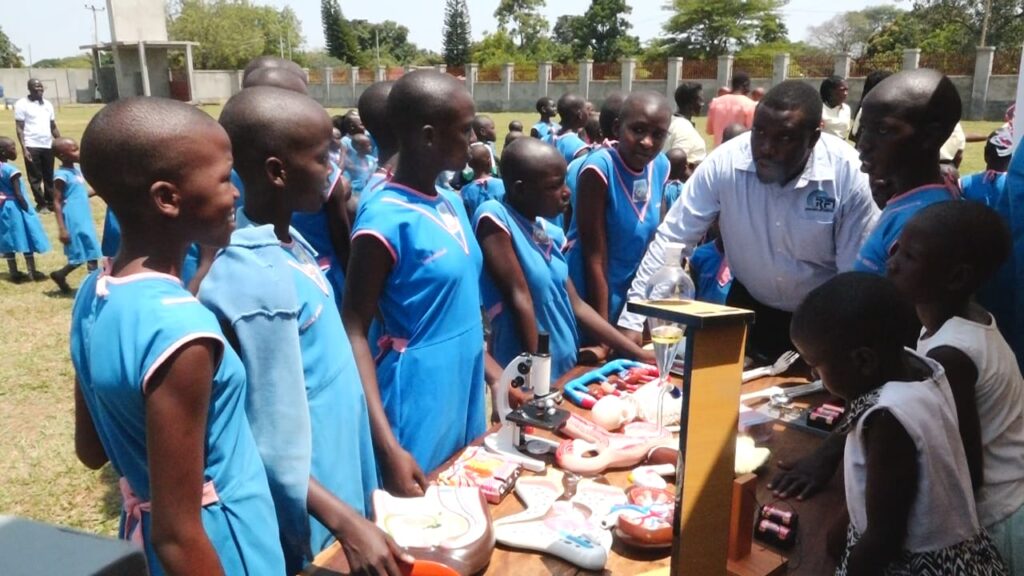
For many years, science education in government primary schools has largely depended on theory, with teachers relying heavily on chalkboard illustrations to explain complex concepts. From sketching the human skeleton to drawing the reproductive system, these methods often left learners struggling to fully grasp scientific ideas. Today, however, a shift toward practical learning is changing that narrative.
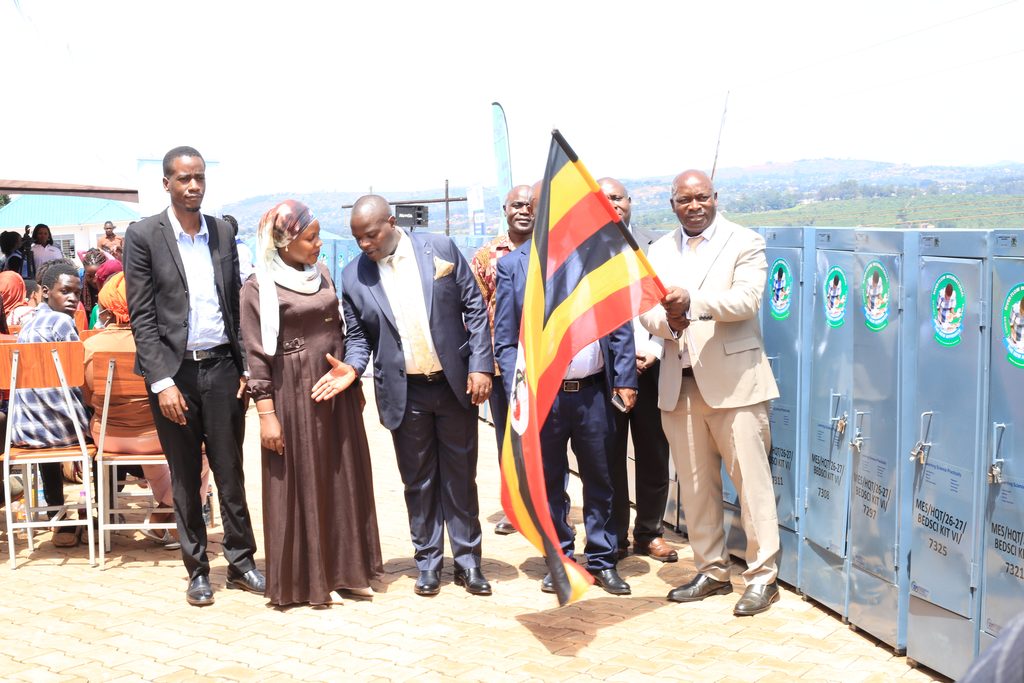
The introduction of science kits in primary schools is transforming classrooms into interactive learning spaces, where learners can see, touch, and experiment with real materials. Education stakeholders say this approach is not only making science more engaging but also improving academic performance.
“Learners are now more interested in science because they can actually see what they are learning,” one education stakeholder noted. “Instead of imagining diagrams drawn on the chalkboard, they interact with real models, which makes understanding much easier.”
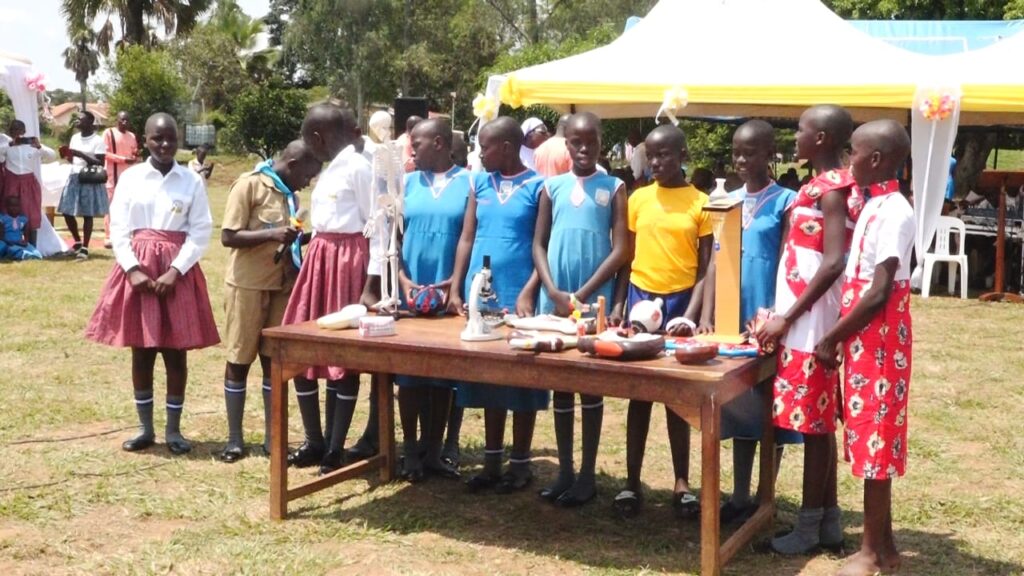
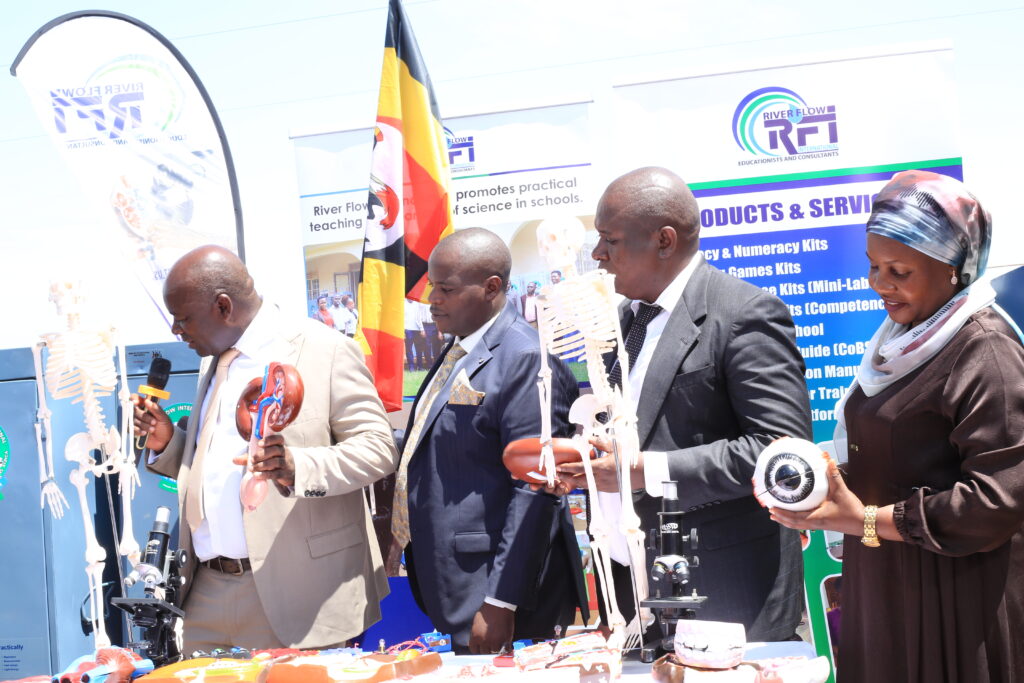
The kits have particularly addressed long-standing challenges in teaching abstract and sensitive topics. Concepts such as the human skeletal system, posture-related health issues, and reproduction are now taught using visual and practical demonstrations. For example, teachers can use spine models to explain how excessive bending leads to back pain, helping learners connect science to real-life experiences.
Denis Okello, Head of Science at Mandera Girls Primary schools, says the impact on learners’ understanding has been remarkable. According to him, the shift from theory to practice has significantly improved performance in national examinations.
“In the past, it was difficult to get more than one or two distinctions in science,” Okelo explained. “But recently, we have seen great improvement. Last year alone, we registered five distinctions, which shows that learners are now understanding better.”
The kits have also improved the teaching of complex biological processes. Teachers can now clearly explain conditions such as ectopic pregnancy, where an embryo develops in the fallopian tube due to blockages caused by infections or scarring. With the help of models, learners are able to visualize these processes, reducing confusion and reliance on memorization.
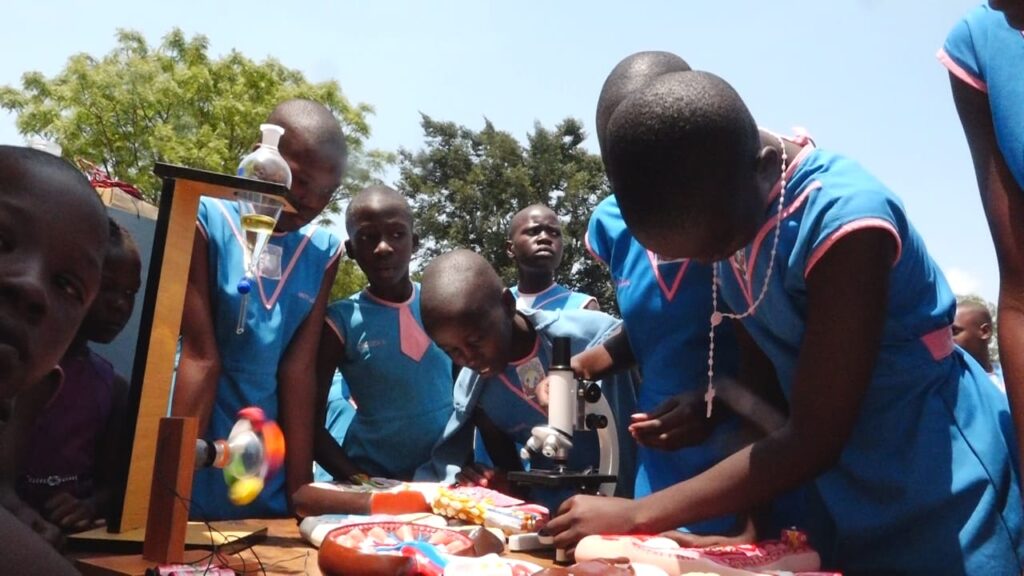
Mr. Stuart Nabaasa, Technical Programs Manager at River Flow International, the implementing partner, emphasizes that the initiative is not only benefiting learners but also empowering teachers.
“The program has equipped teachers with practical instructional materials that make teaching easier and more effective,” Navassa said. “It allows them to cover the syllabus in a shorter time while ensuring that learners fully understand the concepts through active participation.”
By encouraging hands-on learning, the science kits are helping shift education from rote memorization to competence-based learning. Learners are now actively involved in experiments and demonstrations, which enhances critical thinking and problem-solving skills.
Despite the positive outcomes, stakeholders are calling for proper maintenance and management of the kits to ensure sustainability. Schools have been urged to take responsibility for safeguarding the materials so that future learners can continue to benefit from them.
The integration of science kits into government primary schools marks a significant milestone in improving the quality of education. As more schools embrace practical learning, the hope is that science will no longer be a subject to memorize, but one to explore, understand, and apply in everyday life.